What Veterans Day Means and Why the Marines Took Iwo Jima
A Veterans Day issue on how November 11 became a holiday, plus a Marine Corps birthday look at why Iwo Jima mattered, with a Marine’s memory of the flag on Mt. Suribachi.
First reported by U.S. Department of Veterans Affairs and History.com. Summarized here; the full story ran in the printed issue.
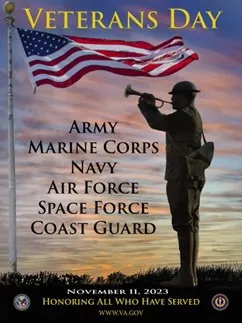
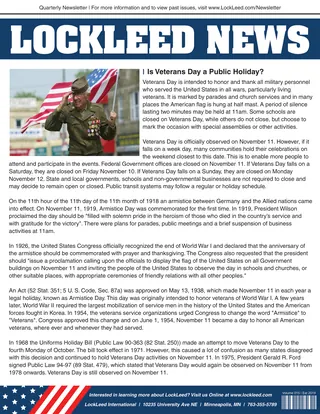
U.S. Department of Veterans Affairs poster
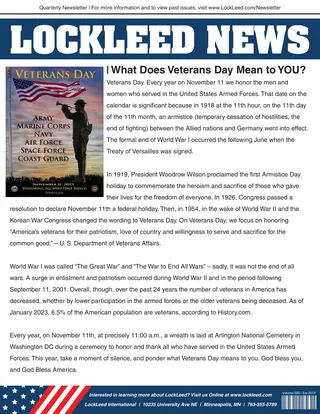
Veterans Day began as Armistice Day, marking the end of fighting between the Allies and Germany on November 11, 1918, and Congress gave it its current name in 1954. Citing History.com, the piece notes that veterans, whose numbers have fallen over the past 24 years, made up 6.5% of Americans in January 2023. It ends by asking readers to pause on November 11, the day a wreath is laid at Arlington National Cemetery, and think about what Veterans Day means to them.
Why Take Iwo Jima?
By Renée R. Roth
In honor of the Marine Corps birthday on 10 November, we looked at one of the definitive battles of World War II, Iwo Jima.
Among the Americans who served on Iwo Island, uncommon valor was a common virtue.
Fleet Admiral Chester Nimitz
Capturing Iwo Jima signaled the start of the American air offensive against Japan. It was the first place in the Japanese territories where Marines hoisted the American flag and was considered the front door to the Japanese homeland. But why was it so important?
Strategic
Over the major cities of Tokyo, Osaka and Nagoya B-29s faced anti-aircraft fire, swarming by enemy fighter planes and even Kamikaze pilots taking them out in the air.
Ground advances reduced Japanese occupation in the Pacific, and we began attacking the enemy homeland with B-29s based in the Mariana Islands, just north of Guam. From one of those islands, Saipan, B-29s faced a 3,000-mile round trip to Japan and dropped their bombs from nearly 30,000 feet, reducing their target accuracy.
Tactical
Because of the distance from Saipan to Japan, the B-29s had no escort by air force jets and no place to stop on the way. The Pacific region was known for foul weather including typhoons, tropical gales and winds up to 200 miles per hour. These conditions limited the speed a B-29 could fly, took them off track and reduced the accuracy of bombs. The U. S. suffered heavy losses of personnel and equipment.
Iwo Jima
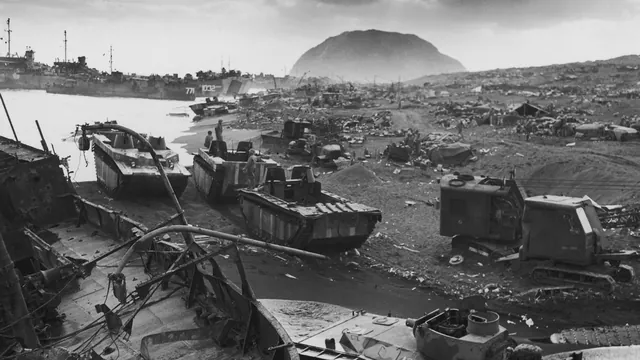
Iwo Jima (750 miles nearly due south of Tokyo) is about 11.5 square miles of mountainous terrain and volcanic soil that made the island scrubby and mostly uninhabitable. The Japanese had three operational airfields and set up their base in underground artillery bunkers. They attacked our B-29s while they were enroute from Saipan to the mainland and back.
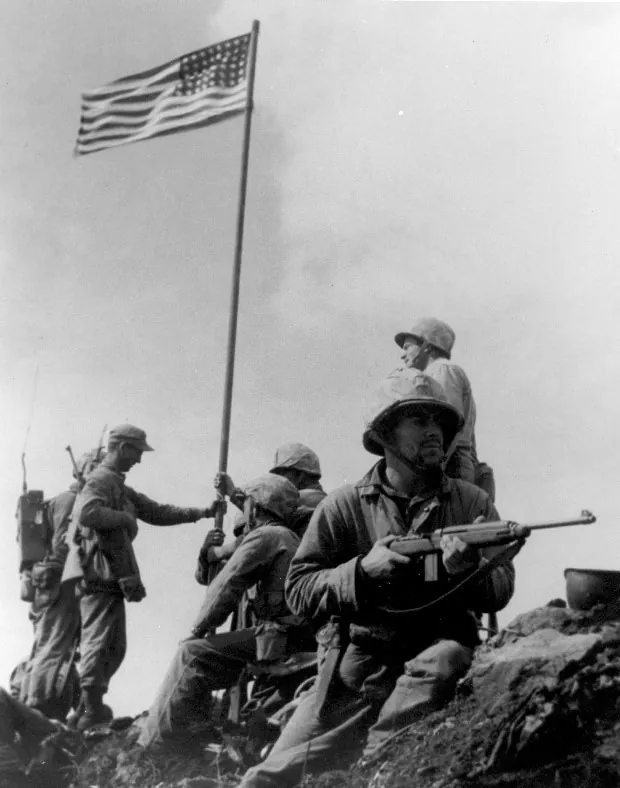
The capture of Iwo Jima allowed America to begin an air offensive against Japan, with devastating effects. Many believe the day our American flag was planted on Mt. Suribachi, it speeded up the timeline to ending the war. In honor of the birthday of the Marine Corps on 10 November, Corporal Marshall E. Harris, remembers that day:
Raising the flag on Iwo Jima on the fifth day did not signal the end of the hellish battle. Progress had been slow for the first four days, and we weren’t sure if this island could be taken. The flag did more than expected. The sight of it on top of Mt. Suribachi gave everyone a shot in the arm and fired up the troops. It gave us all a dose of adrenalin and a feeling that WE ARE GOING TO WIN! WE ARE GOING TO TAKE THIS DESPICABLE PIECE OF WASTELAND!
Corporal Marshall E. Harris
The raising of that flag on Suribachi means a Marine Corps for the next 500 years.
James Forrestal, Secretary of the Navy
First published in November 2023 as LockLeed News Volume 20. Open positions, dates and program details describe that time. News briefs summarize stories first reported elsewhere; the printed edition carried them in full.