Minnesota National Guard History and Jason Rehn’s Journey
A short history of the Minnesota National Guard, and the story of Jason Rehn, a Marine veteran who escorted supply convoys in Iraq during the Red Bulls’ record 22-month deployment.
First reported by Minnesota National Guard website (ng.mil). Summarized here; the full story ran in the printed issue.
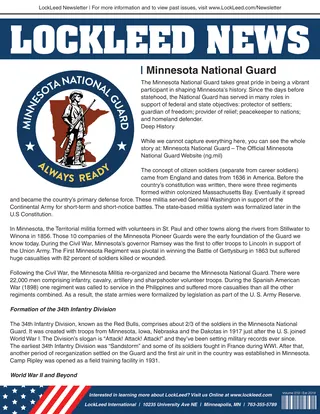
This overview traces the Minnesota National Guard from ten militia companies formed in 1856 through the First Minnesota Regiment’s heavy losses at Gettysburg and the 1917 creation of the 34th Infantry Division, the Red Bulls. It follows the Guard through two world wars, Korea, Vietnam and Desert Storm to Iraq, where more than 8,000 Minnesota troops deployed after 9/11 and 16 lost their lives. The piece points readers to the Guard’s website for the full story and ends with thanks to Guard members and their families.
The History of the Red Bulls
A Patriot’s Journey
By Renée R. Roth
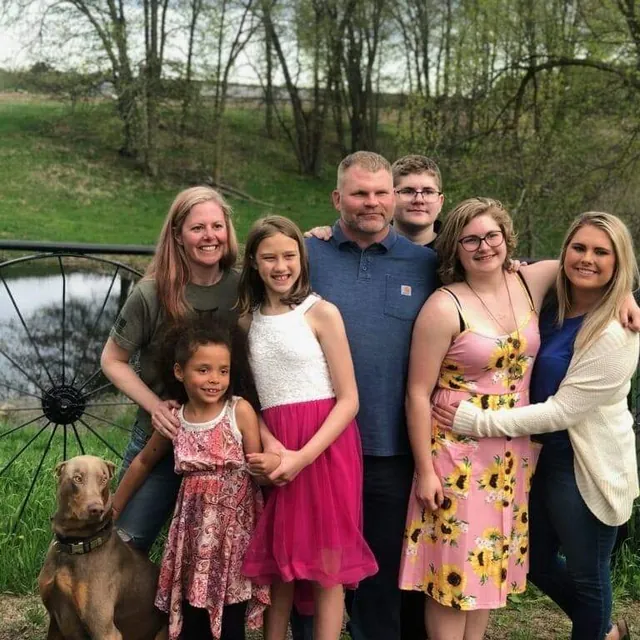
Jason Rehn Pictured With Family
In our ongoing series, The History of the Red Bulls, we highlight soldiers with extraordinary stories. This is one of them. Jason Rehn “was always a patriot” and as early as 9th grade, he knew he’d go into the military to fight for our country. He decided the Marine Corps was best for him, went to Camp Pendleton after graduation (where he met LockLeed founder John Henka) and became an Infantryman. He was fully aware of the potential for deployment and danger. He participated in two stints with 3/1 in the Marine Corps.
After four years, Jason followed his plan, and returned to Minnesota and attended Vermillion Community College to study Forestry.
Even though he was very happy, was married and had two daughters, he missed the camaraderie and sense of community he experienced in the military. When he heard about the Minnesota National Guard’s “Try 1” program, he thought he’d check it out. That allows someone to sign up for a year and see how it goes. That was in August 2001, a month before 9/11. After a few years, his guard commander recommended Jason for OCS, and he attended the Officer Basic Course for combat engineering.
He was assigned to the 682nd Engineering Battalion, part of the 34th Infantry Division. Three months later, they were sent to a six-month training program before being deployed to Iraq. His role involved escorting convoys of five to six armored vehicles transporting supplies such as food and fuel through the country from Camp Adder in Tahlil just north of Kuwait to the forward operating base at Camp Anaconda near Baghdad, our northernmost post in Iraq. The main freeway they took was the well-traveled Route Tampa, and the enemies would ambush our convoys often. They relied heavily on Intel reports to identify potential problems before getting on the road, but they were only so good.
Jason learned in training that tactics, and readiness (for situations you might encounter), are key. This proved useful during the 300+ combat missions his team took. Jason estimates that about one-third of the time they were attacked with either arms fire or IEDs and had to respond. One thing they noticed was that the hotter it was, the more attacks they suffered. They were constantly on the lookout for debris on the road, suspicious buildings and random people standing by the road. Sadly, Jason saw one of his soldiers killed in action and several suffered casualties due to EFPs (like an IED on steroids) which are capable of penetrating armored vehicles. Later, aviation and airlift resources were used to minimize losses on the ground until the last mission in 2011.
Jason’s deployment was extended another six months during the “surge” and you can imagine how the troops felt about that. It turned out to be the longest deployment in history for the Minnesota National Guard: 22 months overall. They returned to Minnesota in August 2007 and Jason left the Guard the following summer.
The hardest part for many returning soldiers is the reintegration into families and friends who have sacrificed so much in supporting each other. There are rough times for loved ones during and after deployment which can lead to alienation, divorce and suicide.
Jason missed his son’s second and third birthdays, and his family worked through several issues when he returned. Eventually they decided to add to their family and adopted two girls. Today he works as the District Conservation Officer at the Hinckley field office of the U. S. Department of Agriculture.
Jason’s philosophy is that God allows us to go through some situations so that we can learn: about ourselves, others, our purpose and Him. Despite the controversy over the Iraq war, Jason knows he was sent to do a job and they did their best. He’s proud to have served our country.
First published in August 2023 as LockLeed News Volume 19. Open positions, dates and program details describe that time. News briefs summarize stories first reported elsewhere; the printed edition carried them in full.