Volume 6November 2020

History of Veterans Day: From the 1918 Armistice to November 11

A Veterans Day issue that traces the holiday from the World War I armistice of November 11, 1918, through its renaming in 1954 to its return to November 11.

  • By LockLeed Team
  • 1 story
  • 1 min read
  • 2-page print edition
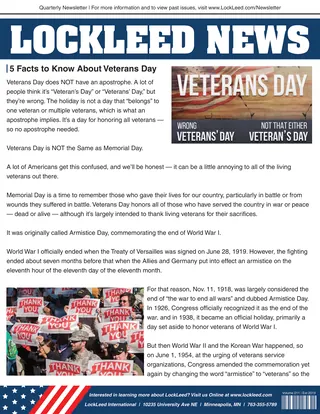
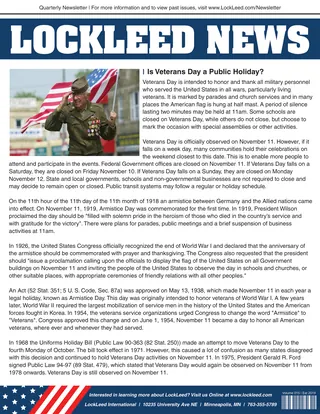
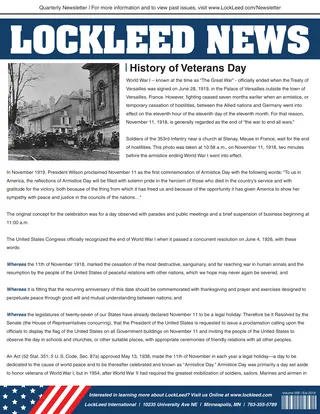
Cover of LockLeed News Volume 6, November 2020: the masthead, the headline History of Veterans Day, and a black and white photo of World War I soldiers beside a church in Stenay, France.Print edition

History of Veterans Day

First reported by U.S. Department of Veterans Affairs. Summarized here; the full story ran in the printed issue.

Veterans Day began as Armistice Day, marking the ceasefire that halted World War I fighting on November 11, 1918, and President Wilson proclaimed the first observance in 1919. Congress made it a legal holiday in 1938, then renamed it in 1954, after World War II and Korea, to honor veterans of all wars. The first Veterans Day proclamation, from President Eisenhower, named the VA's head to chair a national committee. A 1968 law shifted it to a Monday, but a 1975 law restored November 11 from 1978.
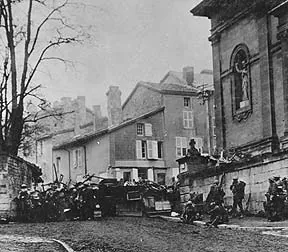
American soldiers gathered at a barricade in a village street beside a stone church, in black and white
The 353rd Infantry at Stenay, France, two minutes before the armistice took effect on November 11, 1918. U.S. Army Signal Corps photo
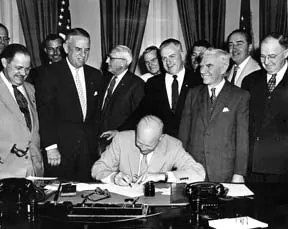
President Eisenhower seated at his desk signing a bill while a group of men in suits looks on, in black and white
President Eisenhower signs HR7786, renaming Armistice Day as Veterans Day. From left: Alvin J. King, Wayne Richards, Arthur J. Connell, John T. Nation, Edward Rees, Richard L. Trombla, Howard W. Watts. U.S. government photo

First published in November 2020 as LockLeed News Volume 6. Open positions, dates and program details describe that time. News briefs summarize stories first reported elsewhere; the printed edition carried them in full.

Work With LockLeed

The People Behind the Stories

Veterans read LockLeed News to find their next role. Employers read it to find their next hire. Either way, the next step is a conversation.